
Excavation & Site Services in Huntington County
Local Septic System Service Expertise
Septic system service and excavating contractor solutions in Allen County, IN keep rural and suburban properties running smoothly. Clay-heavy soils common across northeast Indiana demand expert design and maintenance to prevent costly failures. This page covers permit requirements, local soil challenges, maintenance steps, and when to call for repairs.
How We Work
A clear process from site evaluation through final inspection.
The Installation & Repair Process
Every septic project in Allen County starts with a site evaluation. We assess soil type, groundwater depth, and drainage capacity—critical factors given our region's clay-rich soils. Then design and permitting follow.
Site Evaluation
We test soil percolation rates and check groundwater tables. Allen County requires minimum two-acre parcels for septic systems.
Design & Permitting
We submit plans to Allen County Health Department. Permit review typically takes 3–5 days once all paperwork is complete.
Excavation & Installation
Our excavators position the tank and leach field. We work carefully in clay soils to ensure proper compaction and drainage separation.
Health Department Inspection
County inspectors verify system compliance before burial. We coordinate scheduling and ensure all access points meet code.
Final Grading & Cleanup
We grade the site, mark tank locations, and provide a final system diagram. Your property is left ready for occupancy.
You'll always know what's happening next—and when.
Our Services
Comprehensive septic and excavating services for new builds and existing systems.
Septic System Installation
New septic systems in Allen County must navigate strict health department codes and challenging clay soils. We handle percolation testing, tank sizing, and absorption field layout. Whether you're building near Fort Wayne or in rural townships, we ensure your system drains properly and passes inspection.
- Percolation testing and site evaluation
- Tank selection for your household size
- Absorption field design and installation
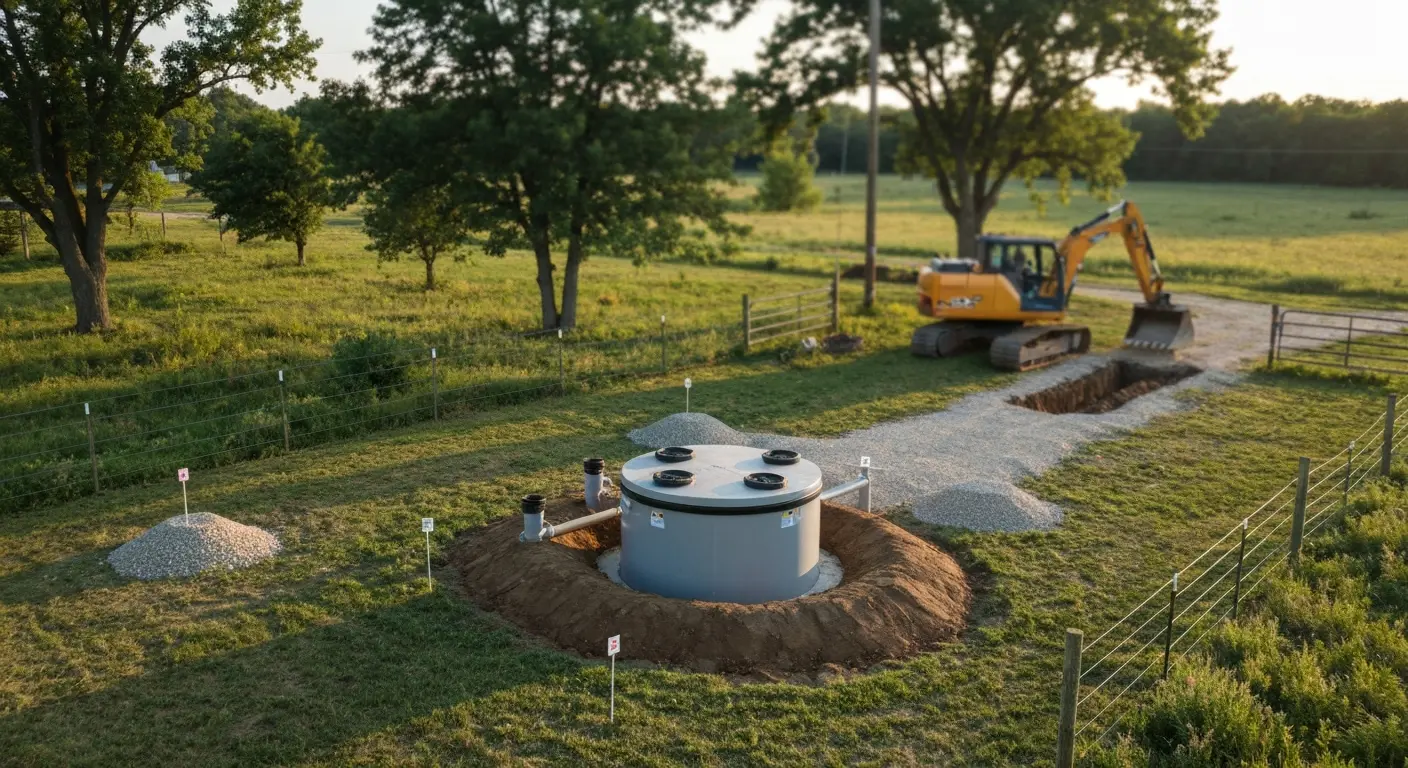
Septic tank positioned in rural Allen County property with proper setbacks.
Septic System Repair
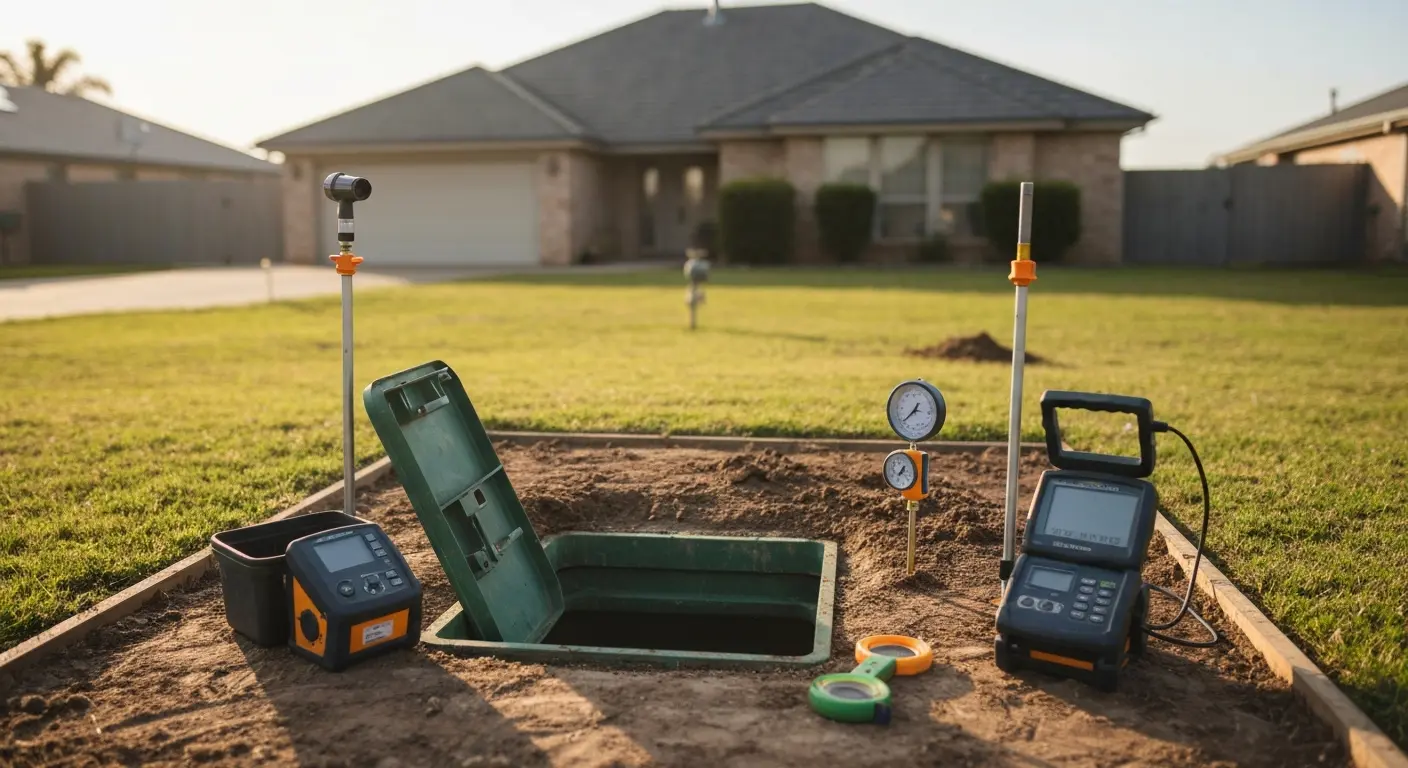
Technician inspecting system access points to diagnose failure issues.
Slow drains, backups, or lawn odors signal system trouble. We diagnose failed tanks, clogged absorption fields, and broken distribution lines. Repairs are completed quickly to restore normal function and prevent groundwater contamination.
- Tank pumping and tank cleaning
- Absorption field unclogging
- Baffle and distribution box repair
Sewer Line Installation & Repair
Sewer lines from house to septic tank must slope correctly and stay clear. Our excavators install new lines with proper pitch and repair breaks caused by settling clay or root damage. We handle trenching, grading, and final inspection coordination.
- New sewer line installation with correct pitch
- Line replacement for breaks and collapses
- Tree root removal and line clearing
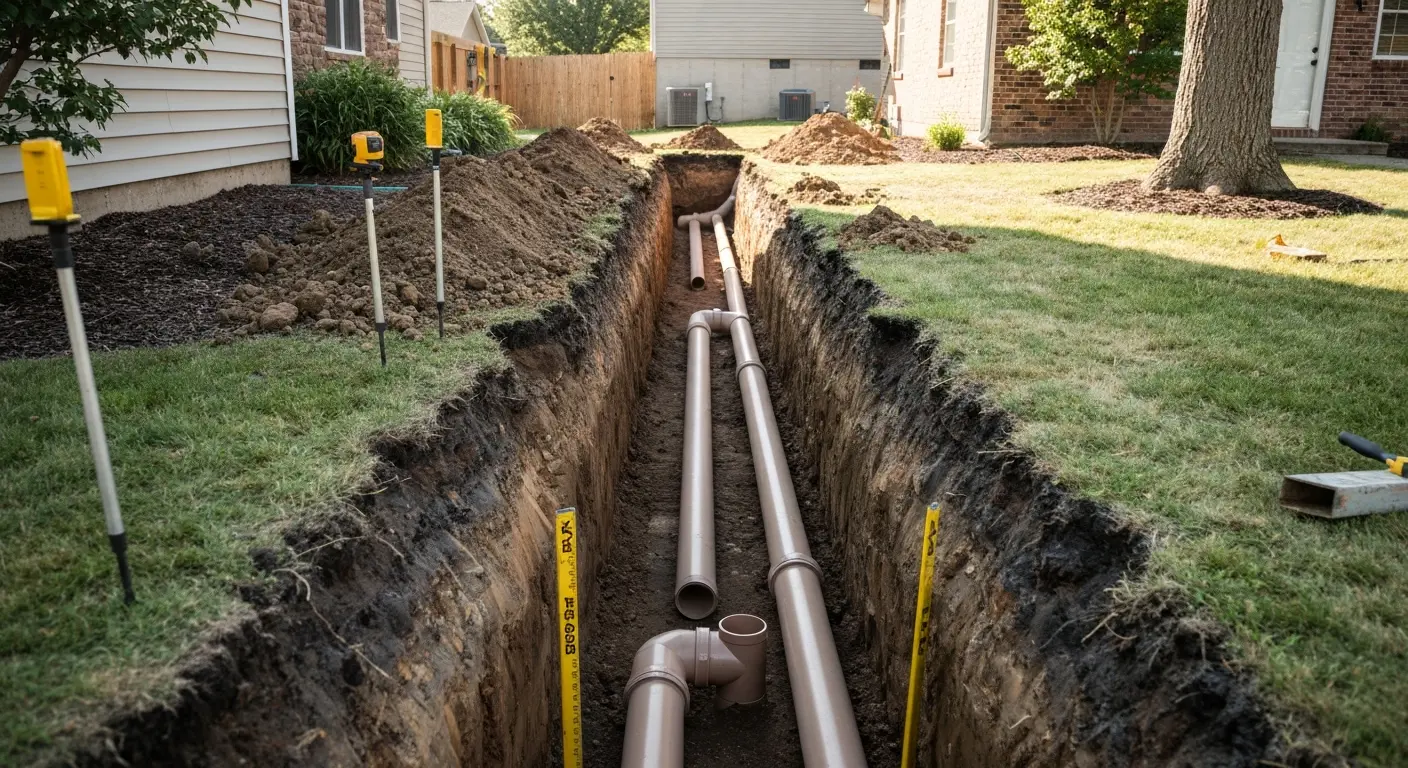
Excavation crew positioning new sewer line to septic system.
Excavating Services
Beyond septic work, we provide grading, site clearing, and drainage solutions across Allen County. Our operators specialize in clay-heavy terrain and understand local drainage patterns. Land prep, trench digging, and fill work are handled with precision equipment and expert oversight.
- Lot grading and site preparation
- Drainage ditch and swale installation
- Fill and compaction for road or drive pads
Why Local Expertise Matters
Allen County's soil and regulations demand specialized knowledge.
Understanding Allen County Clay Soils
Northeast Indiana's clay-rich soils are excellent at holding nutrients but terrible at draining water. Systems must be designed to overcome slow absorption rates. Poor site evaluation leads to failed systems and costly replacements—we get it right the first time through proper percolation testing and professional design.
Clay drains slowly. Standard absorption fields must be larger or engineered differently. Mound systems, sand filters, and aerobic units are common solutions in challenging soil conditions.
Allen County Health Department Compliance
Allen County requires permits for all new systems and repairs. The Department of Health evaluates site suitability and conducts inspections. We handle all paperwork and coordinate with inspectors. Knowing local officials and code nuances saves time and prevents costly rejections.
Maintenance Prevents Failure
Allen County recommends tank pumping every three years. Regular cleaning of the effluent filter prevents solids from clogging the absorption field. Homeowners who skip maintenance face expensive system failures. We help properties join the Allen County On-Site Wastewater Management District for inspections and preventive care.
Coverage Area & How to Reach Us
Serving rural and suburban Allen County properties.
Service Area
We serve the entire Allen County area, including Fort Wayne, New Haven, Woodburn, and surrounding unincorporated townships. Whether your property is near the St. Joseph River or in the outlying agricultural sections, we handle septic and excavating work across the region.
Most projects start with a phone call. Describe your situation—new build, repair, or grading work—and we'll schedule a site visit to assess needs and provide next steps.
Getting in Touch
Call us with questions about your septic system or excavating needs. We're available for emergency repairs, same-day estimates, and project planning. Quick response and clear communication are part of how we serve Allen County properties.
- Phone: Available for emergency service and quotes
- Service coverage: Fort Wayne, New Haven, Woodburn, and rural townships
- Hours: Monday–Friday and available for weekend emergencies
Frequently Asked Questions
What is a percolation test and why do I need one?
A percolation test measures how quickly soil absorbs water. Allen County Health Department requires it for all new septic approvals because it determines system type, tank size, and absorption field dimensions. Clay soils in our area often have slow percolation rates, requiring larger fields or alternative systems.
How often should I pump my septic tank?
Allen County recommends pumping every three years, including cleaning the effluent filter. Larger households or heavy water use may require more frequent pumping. Regular maintenance prevents sludge buildup that clogs absorption fields and causes system failure.
How long does Allen County permitting take?
Permit review typically takes 3–5 days once all design documents and site evaluation reports are submitted. Complex sites or challenging soil conditions may require longer. We handle all submission and coordination with the Department of Health.
What's the minimum lot size for a septic system in Allen County?
Properties must be at least two acres to qualify for a private septic system. Lot size alone isn't enough; soil type, topography, and proximity to wells also matter. We evaluate your parcel against all county requirements.
What causes a septic system to fail?
Common failures include skipped pumping, tree roots breaking lines, clay soil saturation, and improper disposal of grease or chemicals. Slow drains, odors, and lawn seepage are warning signs. Early repair prevents expensive replacement and groundwater contamination.
Can I plant trees or drive over my absorption field?
No. Tree roots damage pipes and compact soil, preventing drainage. Heavy vehicles crush system components. Allen County regulations require protecting absorption fields from vehicle traffic and roots. We mark system locations clearly and advise on safe landscaping.
DISCOVER WHAT OUR CUSTOMERS HAVE TO SAY ABOUT US
REVIEWS
proudly serving these areas
Huntington County
Whitley County
Wells County
Allen County
Wabash County
READY TO take the next step?
get a free quote TODAY!

QUICK LINKS
our services
service areas
operating HOURS
Mon: 12:00 am - 11:59 pm
Tue: 12:00 am - 11:59 pm
Wed: 12:00 am - 11:59 pm
Thu: 12:00 am - 11:59 pm
Fri: 12:00 am - 11:59 pm
Sat: 12:00 am - 11:59 pm
Sun: 12:00 am - 11:59 pm